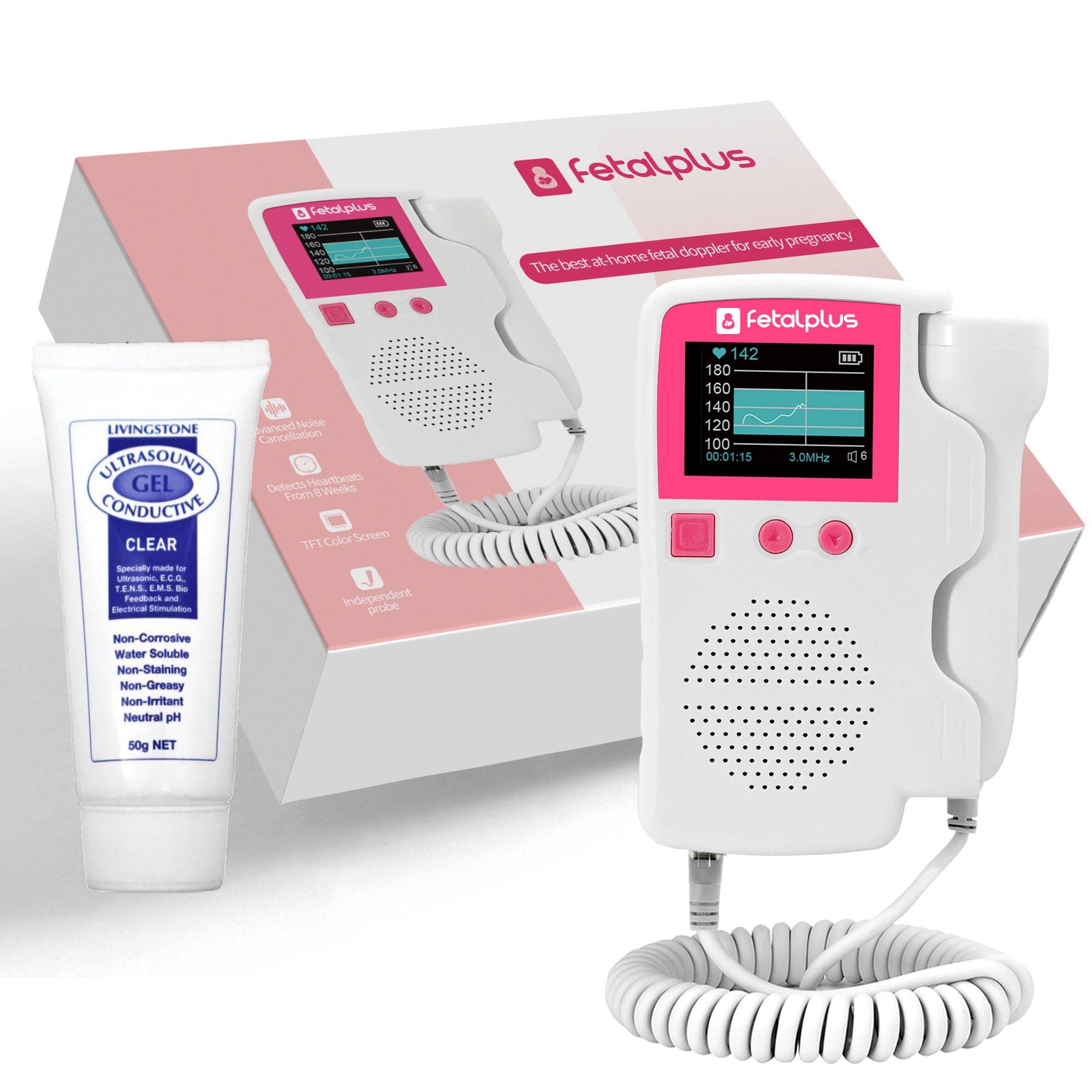
When Can You Hear a Baby’s Heartbeat on a Doppler? A Week-by-Week Guide
Written by Team at FetalPlus - Published on Feb 28, 2026
Hearing your baby’s heartbeat can be one of the most memorable moments of pregnancy. If you are thinking about using a fetal Doppler at home, you may be wondering how early it can work—and what it means if you cannot find the heartbeat right away.
The short answer
Some people may detect a fetal heartbeat with a handheld Doppler from around 9 to 12 weeks of pregnancy, but early results can be inconsistent. For many parents, the heartbeat becomes easier to locate from 14 to 16 weeks.
Not finding it during an early attempt is common. Gestational age, your baby’s position, placenta location, body composition, probe placement and experience can all affect detection.
- A heartbeat may be detectable with a handheld Doppler around 9–12 weeks, but this is not guaranteed.
- FetalPlus recommends using its at-home fetal Doppler after 14 weeks for the most reliable results.
- Detection usually becomes easier as pregnancy progresses, especially around 14–16 weeks.
- Baby position, an anterior placenta, body composition and technique can all affect what you hear.
- Your own pulse and placental blood flow can be mistaken for the baby’s heartbeat.
- A home Doppler should be used only for brief listening and bonding—not to check fetal wellbeing.
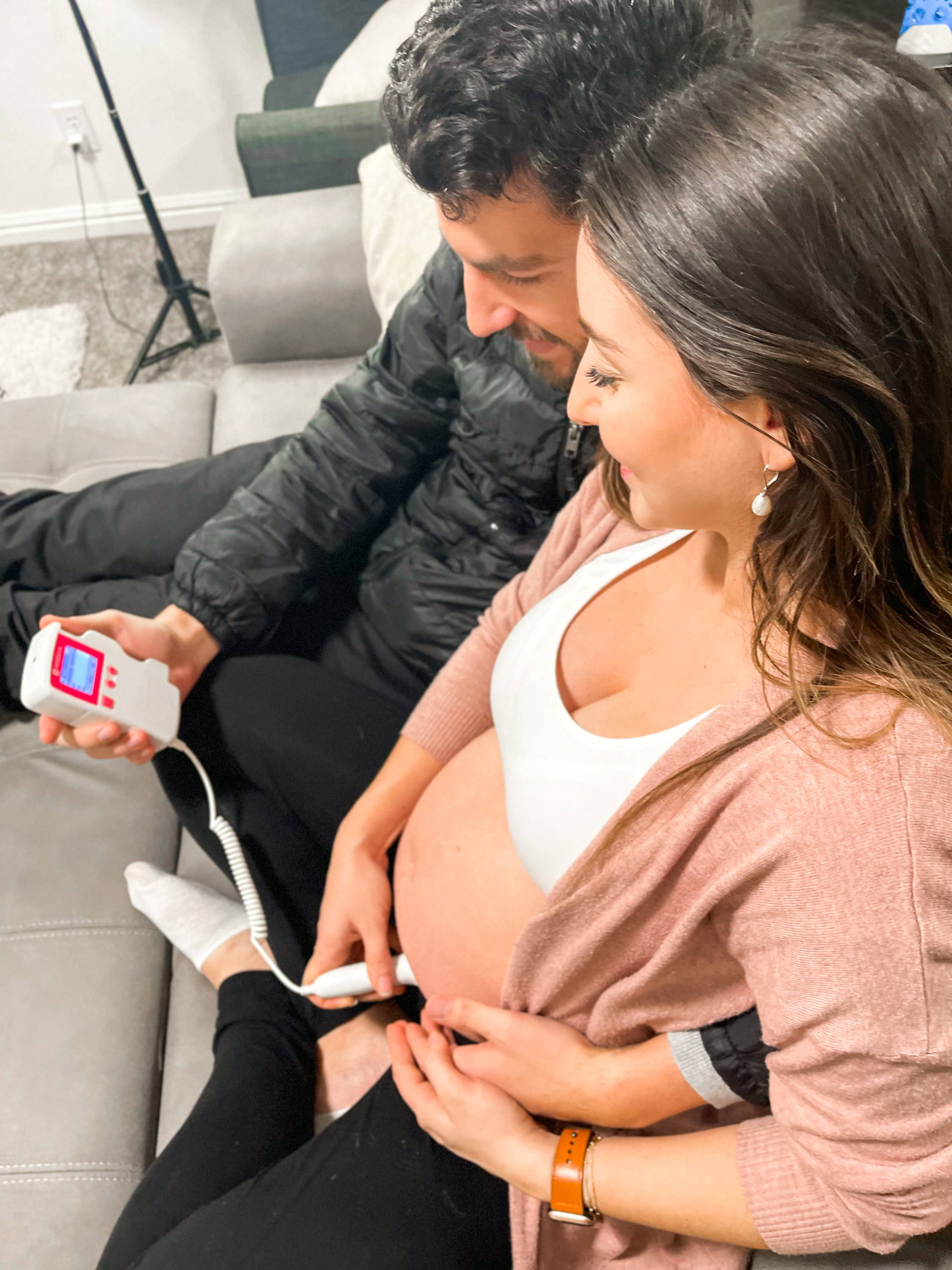
Week-by-week guide
It is too early to expect a home fetal Doppler to find the heartbeat. Cardiac activity may sometimes be seen during an early clinical ultrasound, but that is not the same as hearing it with a handheld Doppler.
Weeks 8–10
The heartbeat may still be difficult to detect consistently with a home Doppler at this stage. The uterus is still low behind the pubic bone, and a slight difference in dates can make a significant difference.
If you do not hear anything, stop the attempt rather than continuing to search for a long time.
Weeks 10–12
This is the earliest window in which some people begin to hear the heartbeat with a handheld Doppler. It may sound like a fast, soft galloping rhythm.
Detection can still be inconsistent. A tilted uterus, an anterior placenta, baby position, body composition or simply being a few days earlier than estimated can make the heartbeat difficult to locate.
Weeks 12–14
The heartbeat may become easier to find as the uterus rises out of the pelvis. However, it can still take patience and small changes in probe angle.
Do not assume that every sound or displayed BPM is the baby’s heartbeat. Your own pulse is generally slower, and placental or umbilical blood flow may create a whooshing sound.
Weeks 14–16
For many people, this is when detection becomes more consistent.
Even now, there may be days when the baby’s position makes the heartbeat harder to locate. Brief, occasional listening is preferable to a long search.
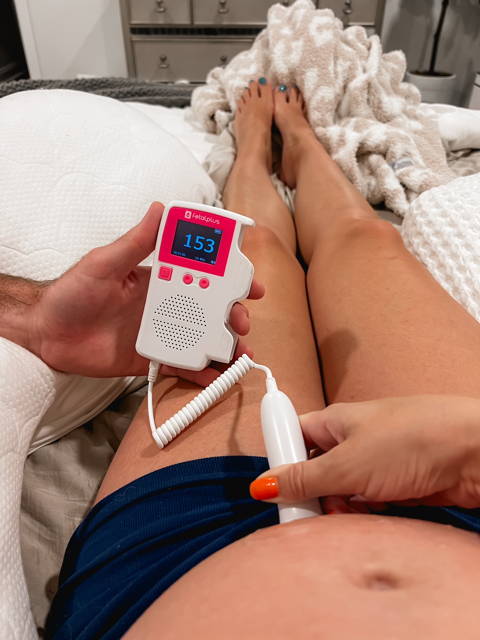
Why can’t I find the heartbeat?
Not hearing the heartbeat at home is common, particularly in the first trimester. Possible reasons include:
Your pregnancy may be earlier than estimated
Ovulation and implantation do not always happen on the expected dates. Even a difference of several days can affect early Doppler detection.
Your baby’s position
Your baby may be turned away from the probe or moving. In early pregnancy, the baby is also very small, so the target area is narrow.
An anterior placenta
An anterior placenta sits at the front of the uterus. It can make fetal sounds less clear because the placenta lies between the probe and the baby.
Uterus position
A retroverted or tilted uterus may place the baby farther from the abdominal surface during early pregnancy.
Body composition
The distance between the probe and uterus can affect the signal. This does not mean a heartbeat cannot be found; it may simply take longer or become easier later in pregnancy.
Probe placement or angle
In early pregnancy, the heartbeat is usually found much lower than many first-time users expect. The probe must also be angled slowly rather than moved quickly across the skin.
Not enough ultrasound gel
Air between the probe and skin interferes with sound transmission. A generous amount of ultrasound gel helps the probe maintain contact and move smoothly.
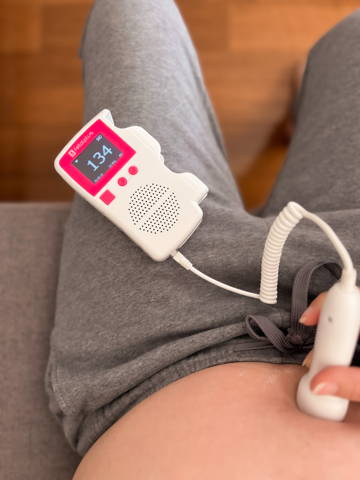
What does a fetal heartbeat sound like?
A fetal heartbeat is often described as a fast galloping or horse-like rhythm. It is usually noticeably faster than the pregnant parent’s heartbeat.
You may also hear:
- Your own pulse: slower and matched to the pulse at your wrist.
- Placental blood flow: a steady whooshing sound.
- Movement: irregular bumps, taps or rustling sounds.
- Digestive sounds: gurgling or bubbling from the abdomen.
Do not rely on sound alone or on a home Doppler’s displayed number to interpret fetal health. Fetal heart rate changes with gestational age and activity, and proper clinical assessment requires training and context.
✔️ 30-Day Money-Back Guarantee